

When servicing, repairing, and diagnosing diesel engines, it is essential to understand how the engine and fuel system operate. Recognising the different diesel fuel systems fitted to each vehicle — and understanding how each component works — should happen before attempting repairs or even plugging in the scan tool.
This article explains how different diesel fuel systems are designed, how they operate, and why assuming “they’re all the same” leads to misdiagnosis. Each system discussed here links to more detailed fault-based articles and real-world case studies drawn from workshop experience.
Diesel Help members gain an advantage because correct system identification comes first. When members log a diagnostic case, we begin by confirming the fuel system manufacturer, turbo configuration, diesel particulate filter (DPF), AdBlue system, and other key details before advising the next step.
This gives our technicians a clearer idea of the systems they’re dealing with, allowing us to give accurate direction over the phone. We explain the role of each component and how they influence the diesel engine. This provides automotive mechanics with a greater understanding of how the common rail engine operates, the types of fuel systems, component operation and locations, plus diagnostic testing procedures.
Why Manufacturer Differences Matter
But aren’t all common rail diesel fuel systems the same?
NO!
Until recently, I believed, I was familiar with the products from the four main manufacturers of light-vehicle CRD systems. However, a new member joined for immediate assistance with a late model Ford Ranger YN2X bi-turbo 2.0-litre that he was having trouble starting after replacing the fuel filter.
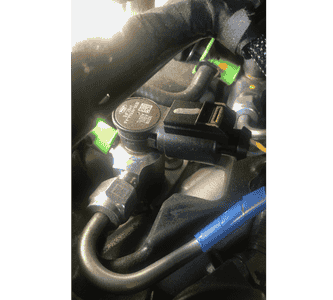
Since this was my first experience with this model, I didn’t hesitate to ask for his help in identifying the fuel system we were dealing with. He was able to provide a couple of images from hard-to-reach areas, which greatly assisted us.
My years of exclusive experience with diesel engines has given me the advantage to recognise multiple CRD designs, making it easier to determine the system in question. This Ranger engine uses a Continental setup just like earlier P5AT 3.2-litre and P4AT 2.2-litre models, but features a revised system. The previous model used different injectors, and without zooming in on the images, the brand was not easily identifiable. With patience, we managed to get the engine running within 15 minutes on the call.
I’ve witnessed technicians taking days trying to start a diesel after replacing a fuel filter or another component of the diesel fuel-system.
All electronic fuel systems consist of wires, computers, injectors, a rail, pipes, high-pressure pumps, fuel filters and a supply. However, the main providers Bosch, Continental, Delphi, and Denso each supply over 100 individual designs for passenger-vehicle alone. As for heavy, agricultural, earth moving, marine and stationary engines, you will find another 100 or so unique designs.
While vehicle owners may not know what lies under the bonnet, technicians must. Accurate diagnosis starts with knowing exactly what system you're working on.
Still diagnosing blind?
Modern diesel fuel systems vary widely by manufacturer and design. When test results stop making sense, getting the right advice early prevents unnecessary parts replacement.
Light Vehicle CRD Systems Are Not Interchangeable
Nissan examples
2006 D22 Navara ZD30 – Electronic fuel pump, Bosch VP44 mechanical injectors.
If you require more indepth training covering the system and component operation through to diagnosing common faults, check out our online course - Diagnosing ZD30 Nissan Navara & Patrol.
2007-15 D22 Navara YD25 – Denso CRD high-pressure pump, suction-control valve (SCV), rail with a pressure limiting valve and electromagnetic solenoid injectors, no in-tank pump.
Navara V6 (V9X) – Bosch CRD with piezo solenoid injectors, two rails, a rail sensor and pressure regulator.
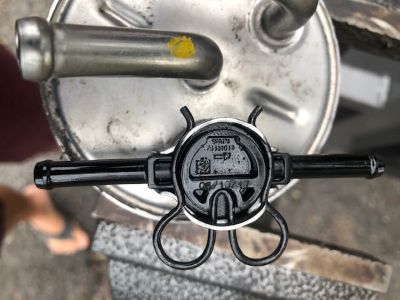
Navara NP300 – Continental CRD, piezo injectors, pump with a suction control valve (SCV) and rail with only a rail sensor. This system uses an in-tank assistant supply pump.
2007 Patrol ZD30 – Bosch CRD, limiting valve in the rail and a normally open type of fuel-metering valve (FMV).
Urvan or cab truck ZD30 – In New Zealand, this model uses a Bosch CRD system with a rail-mounted pressure regulator. This differs from the Patrol, which uses a pressure-limiting valve. This is similar to what's fitted to most Nissan X-Trail, Suzuki Vitara and Renault Koleos models.
Toyota / VW / Ford comparisons
Toyota is one of the few manufacturers that uses a similar system across its diesel models. One significant difference between the 2005 and 2007 HiLux is the rail. The earlier model used a mechanical spring-operated limiting valve, and the latter used an electronic valve.
When working on other Denso systems such as those fitted to Mazdas, Isuzus, Holden Colorados and Ford Transits, issues may arise when using scan tools due to differing ECUs. For example, using injector-feedback values to diagnosis of compression and injector issues on a Toyota differs greatly when doing it on a Mazda 3, 5, CX-5, CX-7 or CX-9.
Whereas, Ford’s Transit has used seven different systems, from all four manufacturers between 1996 and 2021. Whilst Volkswagens are also a mixed bag:
Amarok - The four-cylinder models use Bosch CRD, a pressure regulator design rail and electromagnetic solenoid injectors.
The late model, 2024 VW Amarok, now shares its platform with Ford but they are not using the VW V6 engine. Strangely they have opted for a known troublesome engine, the 3.0L V6 PSA engine. This has been common to split crankshafts in half on the Ford F150 and Landrover Discovery 4. The latest recall in the Ranger V6 diesel has been cam gears failing.
Amarok V6 - Bosch CRD and piezo solenoid injectors.
Caddy and Golf 2010 - Some models used Continental, whilst others used Bosch.
Caddy, Golf and Touareg 2009 - Use a pump-jet unit with a solenoid valve or piezo valve PPD 1.0 and PPD 1.1. It has wires, so often gives technicians a bum steer when diagnosing.
Ford F250 - 7.3-litre models use a hydraulic unit injection system (HEUI).
Ford F250 - six-cylinder models use a Bosch VE rotary mechanical injection pump.
Heavy Vehicle & Off-Highway Fuel System Variations
MAN M20001 1996 to 2005 – electronic fuel pump Bosch VP44 mechanical injectors.
Isuzu Truck 6HK1 – Denso CRD high-pressure pump, suction control valve (SCV), rail with a pressure-limiting valve and electromagnet solenoid injectors, no in-tank pump.
Mitsubishi Fuso Carter TF3C15 – Fiat 4P10 using Bosch CRD with electromagnet solenoid injectors, pressure-control valve. Another Canter also comes with the Mitsubishi engine, 4M50T, which operates Denso CRD fuel system.
Cummins X15-Camins – Bosch CRD, inline rotary style high-pressure pump with inbuilt and external supply feed, limiting valve in the rail.
Mercedes-Benz Actros – Bosch MR/PLD 2 system using an individual pump/unit-injector design.
IVECO – Bosch CRD rotary-design high-pressure pump using a normally open-type metering control valve and rail fitted with a limiting valve.
Scania Euro V – Cummins Bosch XP injector CRD system.
Volvo FH16 – Bosch EUI fuel system.
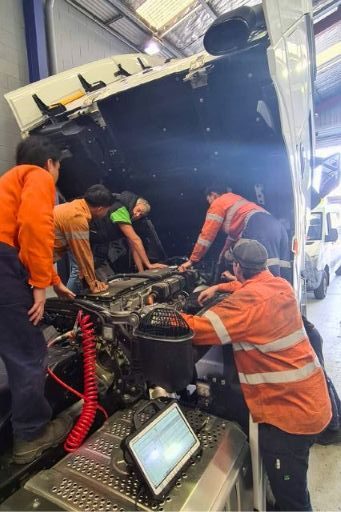
This is just a small selection of vehicles and the multiple designs of fuel systems they use. We have not yet even touched on intake, turbo, exhaust gas recirculation (EGR) or diesel particulate filter (DPF) systems. There are too many to address in a single one article!
We see plenty of challenges when diagnosing these components. Limiting valves, pressure-regulator valves, pumps fitted with SCVs, IMVs, FMVs, or pressure-control valves. Piezo or non-piezo injectors, in-tank pumps or no in-tank pumps — all can hinder a diagnosis if you're not familiar with how they operate.
Critical Diagnostic Checks Before Replacing Components
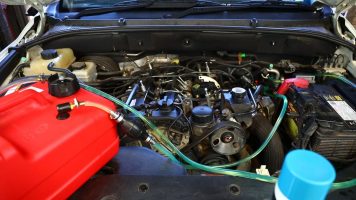
In-tank/no in-tank pumps
Understanding whether a system has an in-tank pump is valuable information. This determines whether we can run the Eliminator, a separate fuel supply designed to bypass the entire fuel supply to eliminate possible restrictions or air from entering. Air or restrictions can set major fault codes, leading to misdiagnosis. For instance, the Navara V6 catches many technicians out during the fuel filter replacement. While an in-tank pump might seem helpful, it won’t assist with bleeding air from the system. We get them running within seconds with the Eliminator. On the other hand, starting a Fiat Ducato Motorhome with an Eliminator is impossible. It requires the ECU to read 4.1bar at the sensor to activate the injectors to operate and start the engine.
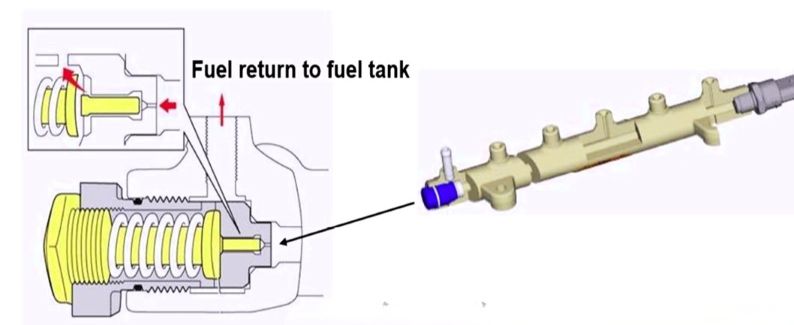
Pressure-limiting valves
This valve is designed to reduce the rail pressure when it exceeds its specified limit. It does not release fuel to regulate the pressure. Modifications, tune chips, remaps, air in the fuel system, and restrictions can cause this mechanical valve to fail. We can test these on the engine without removal using the dead-head tester. When a washer or a torque specification isn’t present, the entire rail must be replaced.
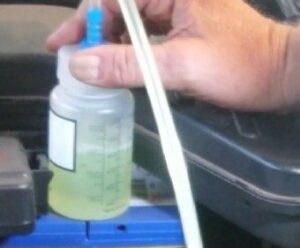
Pressure-control valves
These valves are designed to regulate pressure for different engine loads. It is often used in CRD systems using a normally open type of FMV or SCV. For example, when I demonstrate unplugging the fuel metering valve on a VW Amarok, the pressure regulator immediately corrects the fuel-rail pressure and maintains a level reading. We can test this rail design by connecting a bottle and measuring the return.
Fuel control valves are vital components to operate the modern diesel engine. We have two indepth, online training courses for mechanics covering the operation, function, common faults, and testing of injectors and fuel rails and pumps.
Testing Pumps Without Removal
You may reach a point of no return, contemplating removing the pump and sending it to a diesel shop for testing. Most shops will refuse to test the pump as it can contaminate their expensive equipment. If I were still in that business, I would likely follow the same protocol. The shop would probably want to disassemble the pump, replace worn parts, and return it to you in a ready-to-run state. However, replacing the pump doesn't guarantee that the vehicle will start or that the fault will be resolved.
Before deciding to spend your day removing the pump, ensure you’ve completed all necessary tests:
Perform an AMP clamp test on the control valve. If it is too high, there's no point in only replacing the suction control valve, especially if the failiure is due to contaminated fuel. The entire system is going to compromissed and excessively worn.
Additionally, conduct a back-leakage test on the injectors as you could be losing rail pressure somewhere; even one small internal leak can prevent the necessary rail pressure from building.
It's possible to test for a failing high-pressure pump using a Pico Scope, though not everyone has one or fully understands to apply it to this testing.
Check your scan tool data, and make sure the desired rail pressure matches the actual.
Is there a good power and earth supply to the pump?
Are the injectors receiving a pulse?
If the cam and crank signal drops out, this will also reduce the current to the injectors. The same applies to rail pressure; if it is low, the injectors may deactivate.
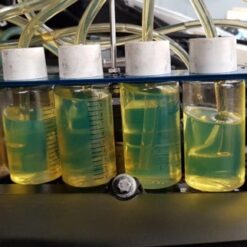
I use a deadhead tester from Delphi. We used to sell these, however since a company takeover two years ago, they are no longer being manufactured. You might source a similar tester, but unfortunately, most on the market are not up to standard and can often demonstrate inconclusive results.
When in-house diagnostics hit a wall
Diesel Help gives workshops access to qualified diesel technicians when you need it.
Technical article by Clinton Brett, originally published in The Automotive Technician - revised 2025
Clinton has over 30 years’ experience as a specialist in diesel fuel injection. With a passion for educating technicians on diesel systems and fault diagnosis, he founded Diesel Help Australia.
Diesel Help Australia works directly with the automotive industry.
If you're not from the automotive industry, and are having issues with your diesel, we can refer you to skilled Diesel Help members in your area.