
A common complaint we see is a diesel that won’t start after fuel filter replacement, particularly on common rail systems where air ingress is poorly tolerated.
Symptoms after fuel filter replacement
Scenarios extend beyond a complete no-start. Vehicles may start or idle briefly, then stall and fail to restart. In some cases, the vehicle stalls shortly after a road test. Others enter a repeated cycle of starting and stalling.
Why this happens
Not all diesel engines tolerate air in the fuel system. This applies to both common rail diesel (CRD) and earlier non-CRD designs. Diesel fuel systems cannot compress air.
Air also provides no lubrication to moving components. Diesel fuel is a lubricant-based liquid that protects the high-pressure pump and injectors. This lubrication is critical for correct operation and long-term reliability, much like engine oil is for internal engine components.
Why common rail systems are more sensitive
The most common diesel engine on the road today is the common rail diesel. These systems operate with much finer tolerances. Many have little or no provision for manual bleeding.
As a result, bleeding air from a CRD system can be difficult without the correct knowledge and equipment.
Why system knowledge matters
This is a good example of why technicians must understand the entire fuel system, not just individual components, when diagnosing post-service faults.
For a structured framework on how diesel fuel systems operate — and how to diagnose faults when service work creates new problems — see our guide on understanding the diesel fuel system you are diagnosing.
Equipment and preparation
To avoid unnecessary difficulty and costly repairs, technicians must follow specific guidelines and use the correct low-cost equipment.
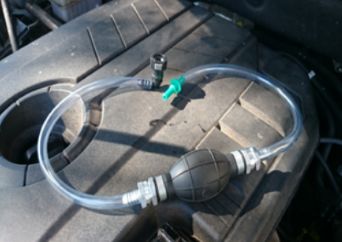
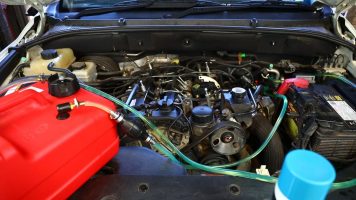
Start by connecting directly to the factory fuel system plumbing. A manual hand-priming setup, clear hose, and suitable fittings allow controlled purging of air from the system.
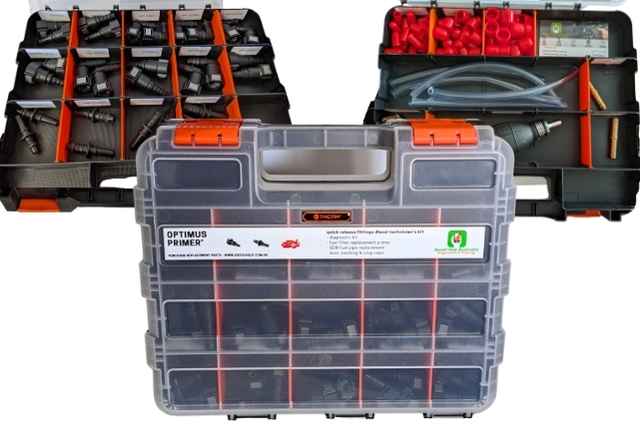
Many workshops use a versatile option such as the Optimus Primer. This manual primer kit connects directly to factory fuel plumbing and allows controlled removal of air from the fuel system.
Bleeding air after fuel filter replacement (common rail diesel)
- Ensure there is diesel fuel in the tank and the vehicle is on level ground. Where fitted, the electric in-tank pump can fail if there is an inadequate fuel supply.
- Replace the fuel filter after you have changed the oil and test driven the vehicle. This will ensure it is safe to rev the engine soon after you replace the fuel filter without damaging the engine.
- Clean the area to be worked on. Spray brake cleaner over all the fittings of the fuel filter or any other connecting pipes you are removing. Use compressed air to clear away any excess dirt and residue.
- Before you remove any fuel pipes, check for any damage and document the location of all fittings and direction of pipes. Often, fuel filter replacements have caused faults or failures when the pipes have been reconnected incorrectly.
- Immediately place blanking caps onto the pipe and fittings as soon as you start removing pipes from the fuel system. This will reduce fuel drain back. By fitting caps, you will minimise air entering the fuel system and protect against dust particles entering the fuel system.
- Before you remove the fuel filter, where applicable, release the drain tap and allow fuel to drain into a clean container. This will minimise spillage over other components and enable you to collect a sample of fuel from the water trap section of the fuel filter. In some applications, this is difficult to access, so when you remove the fuel filter, immediately drain the diesel from the filter into a clean, clear container. Allow this fuel to settle for 10 minutes. You can reassure your customers by checking and reporting on the fuel quality.
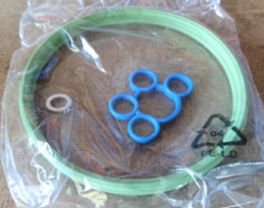
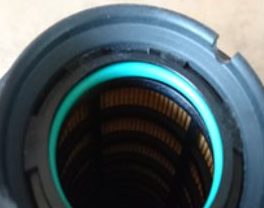
- Before you install the new filter, check that the seals included in the kit are clean and free of cuts or nicks. Some fuel filter kits do not include a drain tap Oring or all new seals - try sourcing new ones. Lubricate the seals with rubber grease before installation.
- Reconnect the fuel fittings and pipes. Next, bleed the air from the system using the rubber bulb hand primer, or if the vehicle already has one fitted. Even after having blanking caps, air can still enter. You can bleed the air highly effectively from the outlet of the fuel filter housing before it enters the high-pressure pump. With or without a manual or electric primer pump (in tank or out of tank), we still recommend that you draw the fuel through using a hand primer.
- On some applications, quick release fittings are used to connect the fuel lines to individual components such as the fuel filter.
- Attach clear hoses to the hand primer and pump it whilst observing the air travelling through the hoses.
- If you have been unsuccessful in purging the air, you can use a separate external fuel supply to isolate the vehicle's fuel system during diagnosis. Use a clear tube directly to the inlet of the pump and return to the separate supply. If you activate the vehicle's electric pump whilst cycling the ignition, ensure the fuel does not spill everywhere. Either blank the outlet or disconnect the relay for the pump.
- Ensure you provide sufficient battery voltage to the starter motor (may require a jump pack).
- After you have removed the air from the fuel system, start the engine and quickly rev it to about 2000 rpm to aid in venting.
- Once the engine idles smoothly, switch off the engine and remove the separate fuel supply. Quickly refit the original pipes and start the engine. Repeat high-revving of the engine and take it for a test drive. When driving, give the engine a good workout, preferably under load conditions, without breaking the law or damaging the vehicle. This will ensure the air is vented from the system.
- Using the scan tool, perform a reset of the fuel system. This may be referred to as a relearn of the 'supply pump', 'fuel pump', or 'fit new pump'.
If correct bleeding procedures have been followed and the vehicle still will not start, this often indicates a deeper supply-side or control issue. These scenarios typically require system-level testing rather than further parts replacement. This is where structured diesel diagnostic support becomes critical.
Watch: How to replace a diesel fuel filter when no hand primer is fitted.
The following video demonstrates correct filter replacement and bleeding techniques on systems without a hand primer.
Special notes
Fuel filter replacement is one of the most common service procedures to result in extended labour time or major failures. Understanding how the diesel fuel system operates, and correctly bleeding air, helps avoid unnecessary downtime and component damage.
On older non-common rail engines, cracking injector pipes has been used to bleed air. On common rail systems, this should be avoided. Opening injector pipes significantly reduces rail pressure and makes starting less likely.
Non-genuine fuel filters have also been known to cause post-replacement issues. If using non-genuine filters, source them from a reputable supplier such as Ryco.
Many no-start conditions after fuel filter replacement are system-level issues rather than component failures. Understanding how air ingress, fuel supply design, and component interaction affect system behaviour is critical to accurate diagnosis.
Technical article written by Diesel Help Australia's trainer and founder Clinton Brett.
Originally published in The Australian Workshop Manager - revised 2025